Why Bangladesh’s Pink Bus Matters and How to Build Roads to Opportunity
Bangladesh has proven its ability to bring about change in its country through the education of its women over the past decades.
By Anika Tahsina · Economy
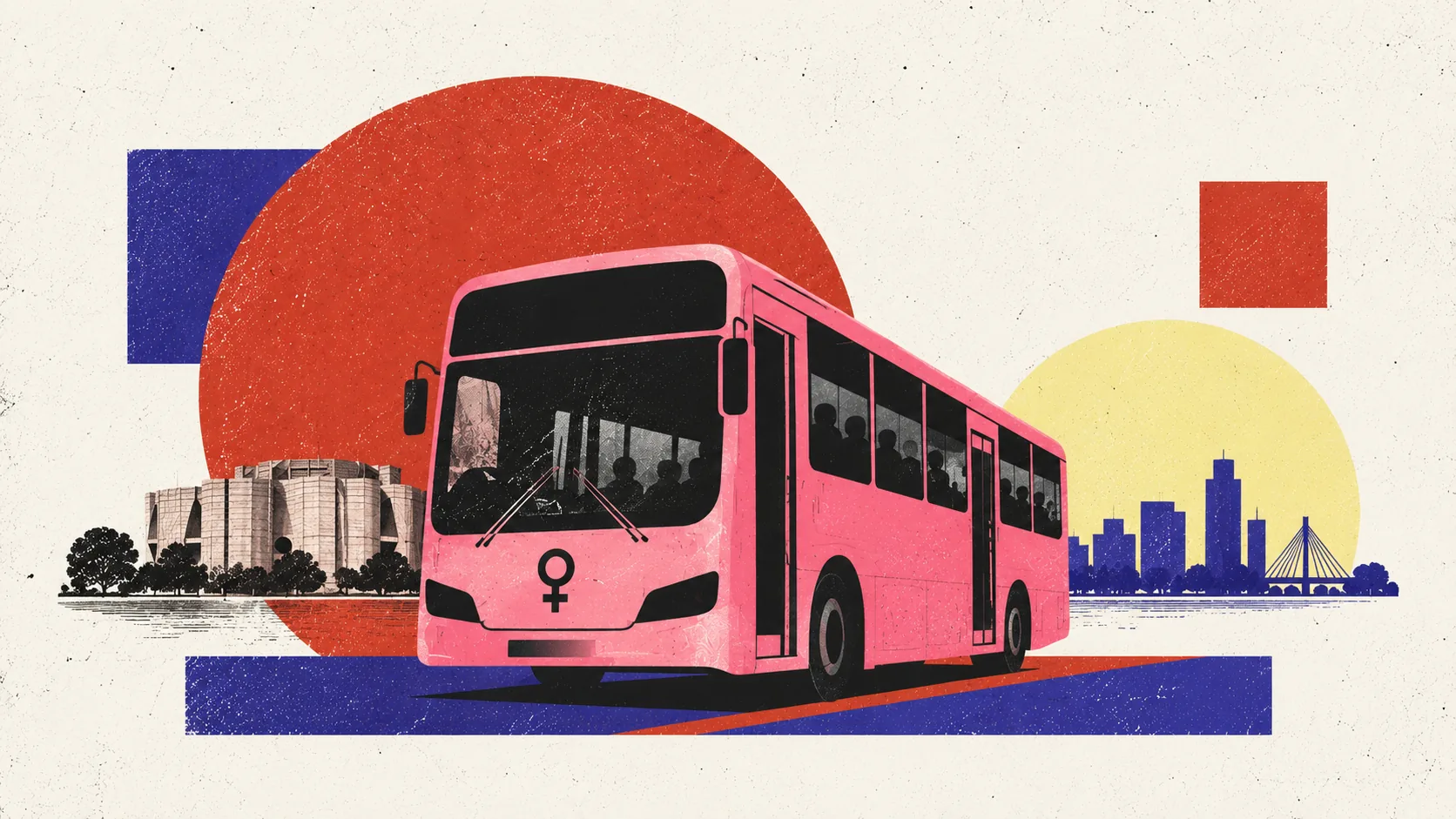
Bangladesh has proven its ability to bring about change in its country through the education of its women over the past decades. Women have equal enrollment rates with men, with a higher ratio of females to males in primary (Gender Parity Index, GPI 1.07) and secondary school (GPI 1.14), with the literacy rate of women standing at 76.5% (Bangladesh Bureau of Statistics, BBS, 2024). Nevertheless, the participation rate of women in the labor force still remains comparatively lower, at 44.2% (World Bank/ILO, 2024), with the majority of women being engaged in informal jobs.
The ready-made garments industry continues to remain the biggest employer of women in the formal sector, employing 53-60% of women, amounting to around 3.5 million women, but only less than 5% of these women occupy managerial positions. This juxtaposition highlights Bangladesh’s success in expanding women’s access to education while underscoring the persistent challenges of translating educational gains into diversified and equitable economic empowerment.
These are the hidden economic costs of unsafe transportation: it doesn’t just exclude women from work. It quietly limits the careers they are able to pursue. Bangladesh’s progress on women’s education makes this contradiction more urgent. A lot of effort has been put into increasing the enrolment of girls in schools and colleges. Women have increasingly been playing a vital role in fields such as garments, health care, education, and business. However, female participation in the workforce is still at just 38.6%, while male participation in the workforce is 80.4% (BBS, 2025).